
Taking Care
How are you coping?

“You’re not destined or chosen, I wish I could tell you that you were if that would make it easier, but it’s not true. You’re are in the right place at the right time and you care enough to do what needs to be done. Sometimes that’s enough.” a quote from The Night Circus by Erin Morgenstern
How bad is wildfire smoke for your health? A reminder from Lloyd Alter of Carbon Upfront!
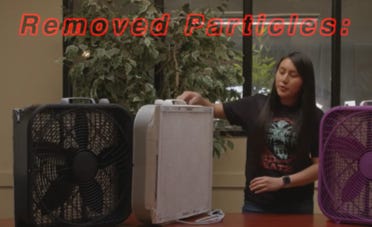
How to make your own HEPA air filter.
Reminder from ReForest London: Water the Trees in your neighbourhood. Be a tree angel - adopting trees on your street benefits the whole community. (costs about 7 cents per tree).
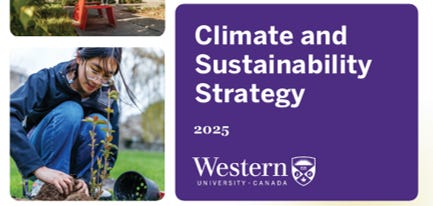
Sustainability at Western: named one of Canada’s Greenest Employers (by Mediacorp Canada), was selected because of its low-carbon campus, real-time energy monitoring and unique efforts like the community garden and Free Store.
Western has launched a new Climate and Sustainability Strategy, moving beyond energy savings and resource protection to focus on restoring and renewing the campus environment with supporting planetary health. (pg 13)
14 LEED certified buildings
32% GHG emissions reductions (2005-2024)
1,900+ research projects tied to UN’s 17 SDGs Sustainable Development goals
2,700+ sustainability courses
41% waste diverted from landfill (2025)
33 student groups advancing sustainability
Survey: Do you have a vegetable garden? MLFPC and the City of London’s Environmental Stewardship and Action Community Advisory Committee (ESACAC) are seeking responses to this survey which aims to collect feedback about the City of London’s Urban Agriculture Strategy (2017) including your awareness of the strategy, what parts are important to you, and your feedback on its implementation.
Advocacy training: Demystifying Climate Finance, hosted by Climate Reality Hub From July 30 to August 20, 2026, dive into four dynamic sessions designed to demystify the global financial system. You’ll uncover the secrets of Climate Finance 101, learn how Multilateral Development Banks can drive a just transition, discover how National Institutions are funding (or blocking) progress, and master practical tools to lead your own finance campaigns.

At the July 15 Infrastructure and Corporate Services Committee meeting, a staff report asking for permission for staff and the mayor to sign a funding agreement with the federal government.
The Canada Public Transit Fund (CPTF) was announced in 2024 to provide stable and predictable funding to address long-term transit goals and aims to:
Increase the use of public transit and active transportation relative to car travel
Increase the housing supply and affordability as part of complete, transit-oriented communities
Help mitigate climate change and improve climate resilience
Improve public transit and active transportation options for all, especially Indigenous People and equity-deserving groups.
CPTF is split into three different funding streams.
1. Metro-Region Agreements, London is not eligible for this stream.
2. Targeted Funding for an Active Transportation Fund. In February 2025, London submitted three applications, totaling $6 million, for multi-use pathways and connections and a pedestrian bridge. Approval is still pending.
3. Baseline Funding, is intended to provide predictable long-term funding to support routine capital and non-capital investments, with an expected focus on projects of a relatively small-scale, including public transit and active transportation system expansions, improvements, and state of good repair.
In November 2024, The City of London was approved for an annual allocation of $5,106,083 of Baseline Funding, equivalent to a 10-year allocation of $51,060,830. On June 5, 2026, London received the Approval in Principle for the Capital Plan.
(video 21:14min) Councillor Stevenson questions why City Council has not been involved in creating the draft plant submitted for the grant. (Staff explained that the draft is only a draft and funding can be allocated each year during the budget process to a short list of eligible projects.) Councillor Stevenson then asked whether the transit budget could then be reduced by this amount instead of enhancing transit. She later indicated she would vote No due to lack of information.
video (39:11) Councillor Skylar Franke indicated that the budget items identified in the report are items that have been part of ongoing council discussions (list on page 3 of the report.)
Note: (pg 3 of the report):
The first requirement for the City to participate in the Baseline Funding program required a high-level ten-year Capital Plan for utilizing the funding. The submitted ten-year plan includes:
a supplemental EA study for north rapid transit;
zero-emission buses (ZEB’s) for the ZEB pilot program (potentially for replacement and expansion buses later in the ten-year period);
replacement and expansion buses (in the short to medium term, these will be diesel until the ZEB trial is complete);
essential upgrades to the existing LTC maintenance and storage facility to keep it functioning until the new facility is in place; and,
funding for Phase Two of the Highbury Facility project (storage and maintenance facility upgrade).
The ten-year Capital Plan was submitted in August 2025 but can be modified as the ten-year period progresses. Approval in principle of the Capital Plan was received on June 5, 2026.
The vote passed 4-1, and proceeds to the next Council meeting for ratification.

The city’s Strategic Plan Performance Dashboard has 8 Areas of Focus.
Strategic Area of Focus: Mobility and Transportation
Outcome 1: Londoners of all identities, abilities and means can move throughout the city safely and efficiently with expected results of improving reliability, quality and safety of all modes of mobility, increasing access to sustainable mobility options, improving ridership and rider satisfaction, by helping ensure that the transit system operates reliably, efficiently, and accessibly as it is introduced into London’s transportation network.
Expected Result 1.1: Improved reliability, quality and safety of all modes of mobility.
Expected Result 1.5: London’s active transportation network is better connected and serves persons of all ages and abilities.
Expected Result 1.6: Public transit better meets the needs of London’s workforce.

*note: register to events to receive notifications if events canceled due to smoke
Sat July 18, 9:30 - 11:30am Waldorf Park, Antler River Rally clean up event.
Sat July 18, 11am-12:30pm Edible Food Bike Tour Slow-roll through Kensington Village and Blackfriars to discover the agricultural history of what was once London's breadbasket.
Thurs July 23, 9:30PM-midnight, Moth Bioblitz, Western University. A guided event surveying nocturnal biodiversity hosted by Tim Hain and Tristan Ducharme.
Sun July 26 2-4pm Beading workshop with Mikayla Stevens, Museum London
Sun July 26, 2pm How to Plan your Butterfly Big Year, hosted by David Suzuki Foundation. Whether you want to find new species or see as many butterflies as possible, this webinar will provide the “butterflying” skills you need to make it happen.
July 27-Aug 3, Backyard Bioblitz by Nature Conservancy Canada. Sign up to upload your photos of nature.
Sat Aug 1, 9am Mid-summer Native Plant Sale hosted by Kevin Gauci, 750 Inverness Avenue
Sat Aug 8, 2pm River Revery – Music and Poetry with Penn Kemp & Ann Denny at Westminster Ponds Centre, hosted by Thames Talbot Land Trust
Wed Aug 12, 4-5pm Monthly Dose of Climate Hope with Bill McKibben. In conversation with Sam Matey-Coste, of Climate Action Now
Sat Aug 29, 10am-4pm 2nd annual London Urban Farm Tour hosted by London Urban Farmers
Fridays for Future is paused for the summer. This is a small group, dedicated to holding a place for youth in support of Greta Thunberg’s global movement.

Protect the Irreversible: What Matters Most in an Uncertain Time
By Nate Hagans of the Great Simplification
Nate challenges the long-held assumptions that equate growth with success. He explores why the most regenerative paths available to us often look like decline from the outside and discusses the ways in which our civilizational foundations have been obscured by a societal trajectory of constant growth. Overall, this episode offers a mirror for reflecting on the landscapes we inhabit today and the quiet work required to navigate toward a better future for humanity and the biosphere.
Are your daily choices strengthening your foundations, or are they slowly eroding the capacity you'll need for what's ahead? Which personal future scenario do you feel you’re living in today, and what patterns are quietly shaping where you're headed? And how would your life change if you measured success by regeneration instead of productivity or growth?