
Feeling the Heat?
and how cycling scores big at FIFA in Toronto

“To allow oneself to be carried away by a multitude of conflicting concerns, to surrender to too many demands, to commit oneself to too many projects, to want to help everyone in everything, is to succumb to violence. The frenzy of our activism neutralizes our work for peace. It destroys our own inner capacity for peace. It destroys the fruitfulness of our own work, because it kills the root of inner wisdom which makes work fruitful.” Thomas Merton from Conjectures of a Guilty Bystander
Feeling the Heat? When the Middlesex-London Health Unit issues a Heat Alert, Londoners can access cooling centres. (more info: 519-661-5575)
East Lions Community Centre, 1731 Churchill Avenue
North London Optimist Community Centre, 1345 Cheapside Street
Startech.com Community Centre, 501 Southdale Road West
South London Community Centre, 1119 Jalna Boulevard
London Public Library Central Branch, 251 Dundas Street
Spray pads open daily from 9 a.m. to 9 p.m.,
Outdoor pools, indoor pools and wading pools, various times
Park washrooms mostly, 8:30 a.m. to 7:30 p.m.
Water fountains are available at select parks across London.
Additional supports are available for individuals experiencing homelessness during heat warnings, including outreach services, drop-in spaces, emergency shelters and violence against women shelters.
You can subscribe to the Health Unit’s Extreme Weather and Air Quality alerts.
About those pipelines… an excerpt from an interview with Amy Janzwood, (Asst professor, political science and environment at McGill) by Emma Gilchrist of the Narwhal
..about oil specifically, this is an industry that’s had record profits that’s been unwilling to pay for its own pollution — whether that’s orphan wells and cleanup or carbon.
We’re told we need to double down and it’s necessary for economic prosperity. But what we’re seeing is the bill that’s racking up that taxpayers are on the hook for — when there’s an industry that can very well pay for it, and is unwilling to because they know they have a government that will backstop it.
Is oil and gas key to Canada’s economic prosperity?
The oil and natural gas industry accounted for $88 billion (3.8%) of Canada’s overall gross domestic product (GDP) in 2025 (Source: CAPP).
In 2024, tourism activities generated $104.4 billion in revenues, distributed over a wide range of services provided in communities of all sizes across Canada. (Source: StatsCan)
Agriculture generated $149.2 billion (around 7%) of Canada’s (GDP) (Source: Agriculture Canada)
The cost to clean up oil and gas pollution is not factored in to these stats. The funding gap for capping orphan wells is now $178 million, this after the federal government provided $1.7 billion to the governments of British Columbia and Alberta, Saskatchewan in 2020 to help solve the problem, according to the PBO report. It is estimated that Alberta and Saskatchewan's 120,000 unplugged inactive wells produce a total of 16,000 metric tonnes of methane annually on average.
Take Action (from 350.org): It’s important to remember that we can push this government to change its course (on pipelines) if enough of us raise our voices together.
Use our template to participate in the public consultation process before the public consultation closes on July 22. Join us next week for a Power Hour call where we’ll take action together in real-time and offer support writing your own custom letter.
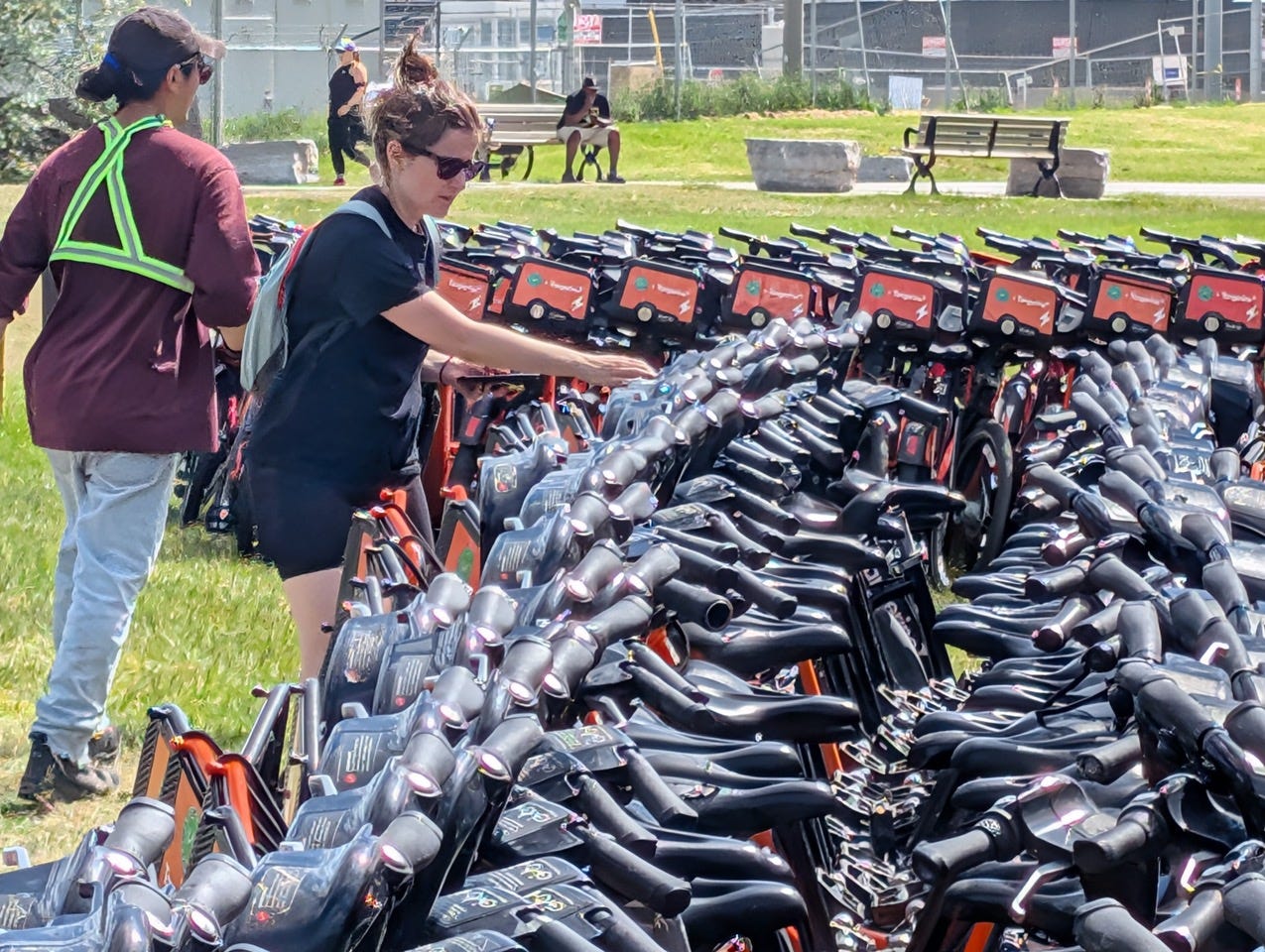
FIFA’s Bike Share Solution (reported by CBC’s What on Earth)
Toronto offered free bike valet service at three locations, with “unlimited docking capacity and extra bikes” from Bike Share Toronto. It also offered weekly bike-share passes. Out-of-towners bought three-quarters of those passes.
On each match day in Toronto, the valet locations handled about 2,000 rides.
On June 12, cycling activity near Toronto Stadium was up 65 per cent.
On June 13, Bike Share Toronto set a single-day record of 49,048 rides.
Transit ridership and pedestrian traffic also increased, while traffic volume on the city’s expressways was 10 to 30 per cent lower than usual on match days.
Bike-sharing services have grown rapidly in cities across Canada, and Toronto’s system was a key part of the city’s strategy to manage traffic during the World Cup.
Petition e-7550: To “Cease all incentives, subsidies, and permit accelerations for AI data centres”; endorsed by MP Jenny Kwan, Vancouver East. Deadline: Sept 24

At the next Community and Protective Services Committee meeting, a motion by Councillor Skylar Franke to help vulnerable seniors access air conditioning.
The city has existing budget for ACs for those on ODSP and OW, and those living under the low-income cut-off through their discretionary benefits, but many seniors are just above the cut-off, meaning they are unable to qualify for this program.
I’m asking staff to bring back a report on a pilot program for summer 2027 to figure out a way to ensure those who need air conditioners the most are able to access them. Read the motion here and CTV article here.
Submit your comments to councilagenda@london.ca before July 20th at 9am.
Also being discussed at this meeting:
Next year’s Winter Response proposal would provide 235 overnight beds and warming spaces every night, with an additional 29 surge spaces available during extreme cold events. The total cost is estimated at $5.78 million, requiring an additional $2.15 million beyond previously approved funding
The Mayor has submitted a motion to request staff review and report back on the implementation of a Special Constable Program, which would cost around $2 million a year to provide for 11 Special Constables (in addition to the current $2.94m the city spends on private security).

The city’s Strategic Plan Performance Dashboard has 8 Areas of Focus.
Strategic Area of Focus: Climate Action and Sustainable Growth
Outcome 3: London's infrastructure and systems are built, maintained, and operated to meet the long-term needs of the community.
Expected Result 3.1: The infrastructure gap is managed for all assets.
Strategy B: Invest in publicly-owned assets to maintain existing levels of service and to implement planned levels of service.

Sat July 11, 3-6pm Join Lois Ward’s municipal election campaign (Westmount area-Ward 10) in a door knocking event. Email lois@loiswardforward10.com for location.
Tues July 14, 11am Join SCAN! for a protest at MP Kayabaga's office, 390 Commissioners Road West followed by social time.
Sat July 18, 9:30 - 11:30am Waldorf Park, Antler River Rally clean up event.
July 27-Aug 3, Backyard Bioblitz by Nature Conservancy Canada. Sign up to upload your photos of nature.
Sat Aug 1, 9am Mid-summer Native Plant Sale hosted by Kevin Gauci, 750 Inverness Avenue
Wed Aug 12, 4-5pm Monthly Dose of Climate Hope with Bill McKibben. In conversation with Sam Matey-Coste, of Climate Action Now
Sat Aug 29, 10am-4pm 2nd annual London Urban Farm Tour hosted by London Urban Farmers
Fridays for Future 2:30 - 3:30pm continues every Friday at the corner of Dufferin and Wellington streets. Bring a sign, or just come to chat and experience fellowship with other concerned citizens. This is a small group, dedicated to holding a place for youth in support of Greta Thunberg’s global movement.

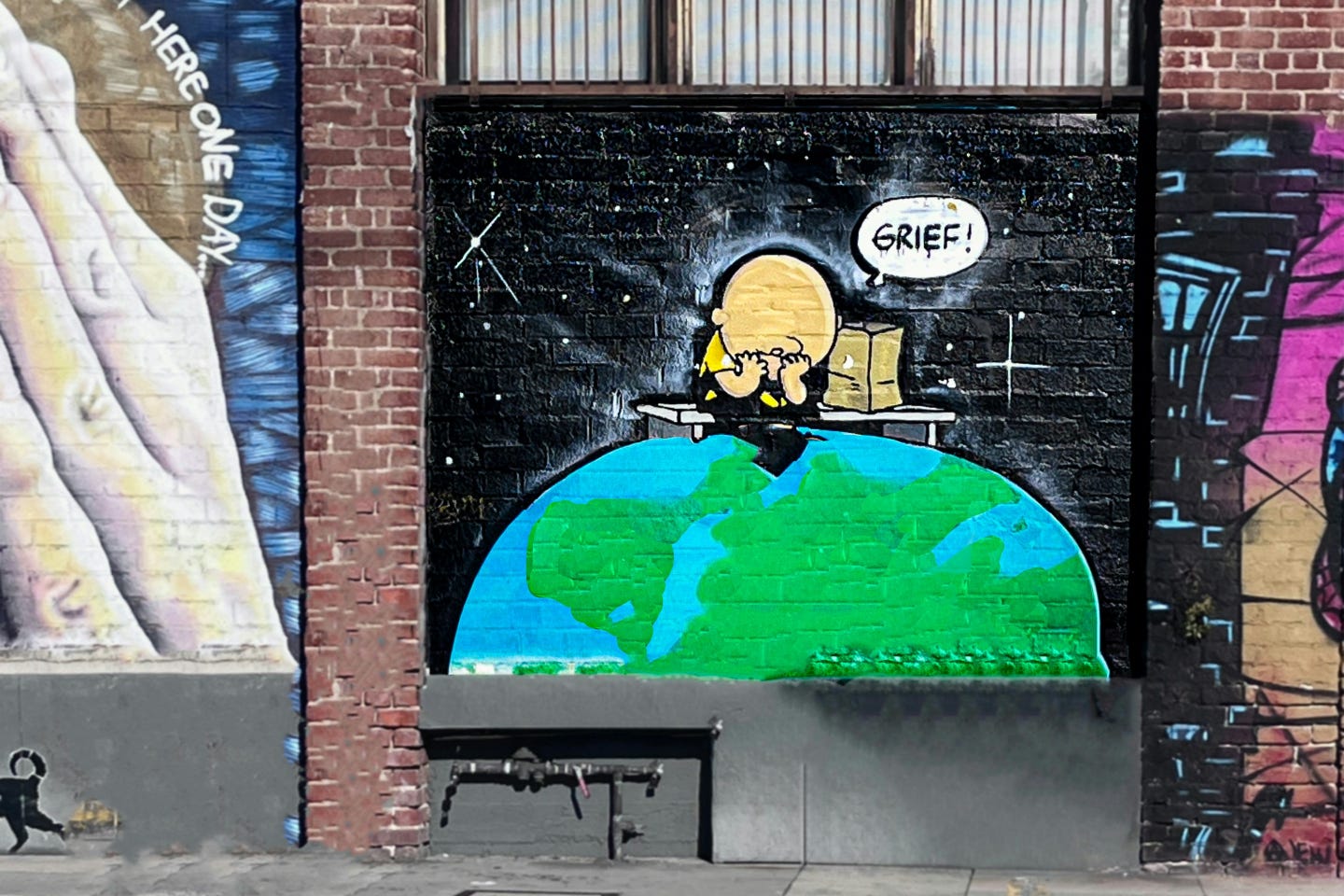
‘Let’s call it earth grief’: Naming pain and loss in the age of climate crisis
By Stephanie Klotz, originally published by Stephanie Klotz on Linkedin reposted by Resilience. Excerpts:
Grief is the imprint love leaves on our lives …a reflection of our profound connection to the land, to the ecosystems that sustain it, and to the people who inhabit it, past, present, and future.
So, by calling this pain grief and creating community around it may even help build the supportive social, cultural and societal context that could combat the very real PTSD that communities around the world are already experiencing and will continue to face, as the impacts of climate change intensify.
Importantly, recognizing our pain as grief allows us to come full circle back to love. If grief and love are two sides of the same coin, then acknowledging the experience of Earth Grief deepens our love. It invites us to cherish every moment with this unique blue planet and recognize its fragility. It calls us to honour our shared humanity and walk boldly together. By acknowledging our grief, we acknowledge our love. And love moves mountains.
For more thoughts on ecological grief, listen to Beyond Ecological Grief, a podcast mini-series by the National Observer.